
Strong for Life: Why Strength Training Matters More Than Ever
Fitness • November 12, 2026
Carry your groceries. Climb the stairs. Keep up with your kids. Enjoy your favorite activities. Move through life feeling strong, capable, and confident.
These everyday moments are exactly why strength training matters.
While building muscle is a great benefit of strength training, the real impact goes far beyond the gym. Strength training supports longevity, helps maintain mobility, and builds the foundation for an active life.
The Benefits of Strength Training Go Beyond Muscle
Strength training is one of the most valuable things you can do for your long-term health. As we age, we naturally lose muscle mass and strength, which can make everyday activities more challenging.
The good news? Regular strength training helps you maintain muscle, support your bones, and stay active through every stage of life.
Here’s what getting stronger can do for you:
- Build and maintain muscle: Strength training helps preserve muscle mass and develop the strength you need for everyday movement.
- Support bone health: Resistance exercises help maintain bone density, an important part of healthy aging.
- Support injury prevention: Strengthening the muscles, tendons, and ligaments around your joints creates a protective buffer that absorbs everyday impact and keeps your body resilient against strains and sprains.
- Make everyday movement easier: From lifting luggage to getting up off the floor, stronger muscles help you move with greater confidence.
- Support long-term independence: Maintaining strength and physical function helps you continue doing the activities you love as you age.
Whether you’re picking up weights for the first time or working toward your next personal best, every step forward counts.
Functional Training: Strength for Real Life
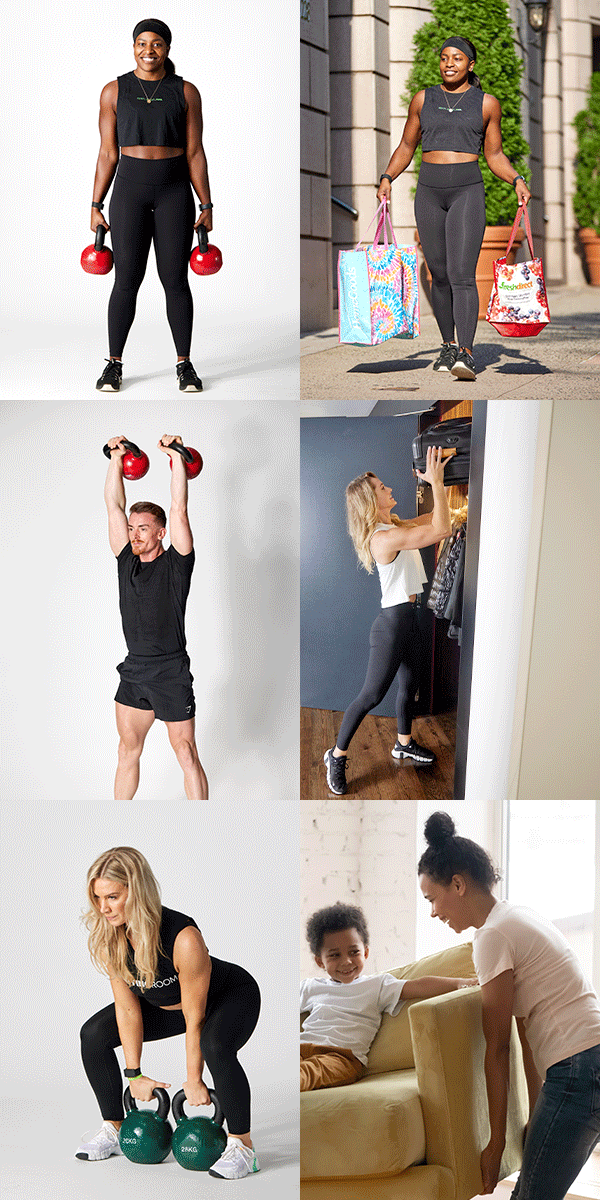
Ever wonder why squats, lunges, hinges, and carries show up in so many workouts?
Because they’re movements your body uses every day.
Functional strength training focuses on movement patterns that translate beyond the gym. Think bending down to pick something up, carrying a heavy bag, or reaching overhead to put something away.
Here’s how some familiar exercises translate into everyday life:
- Squats: Build lower-body strength for sitting, standing, and climbing stairs.
- Deadlifts: Strengthen the muscles used when lifting objects from the ground.
- Loaded carries: Develop grip, core, and total-body strength for carrying everyday items.
- Presses: Build upper-body strength for lifting and reaching overhead.
- Lunges: Challenge balance, coordination, and single-leg strength.
These movements aren’t just about completing another rep. They’re about building strength you can use.
And yes, good things come to those who squat.
Low Impact Doesn’t Mean Low Challenge
Let’s clear something up: A great workout doesn’t have to involve jumping, running, or high-impact movements.
Low-impact training can still challenge your muscles, elevate your heart rate, and help you make meaningful progress.
The difference is how you get there.
Low-impact exercises generally reduce the force associated with movements like jumping and landing. But that doesn’t mean they’re easy.
A controlled kettlebell deadlift, a challenging squat, or a loaded carry can demand plenty of effort without requiring your feet to leave the floor.
One Workout. Your Own Pace.
No two bodies are the same. So why should every workout look exactly alike?
Maybe you’re new to strength training. Maybe you’re returning after some time away. Or maybe you’re an experienced athlete ready to take on a new challenge.
Wherever you’re starting, there’s room for you here.
At Fhitting Room, our certified trainers, known as FHITpros, bring expert instruction and personalized attention to every class.
Through exercise modifications, movement variations, and individualized guidance, our FHITpros help you find the right challenge for your fitness level and goals.
That could mean:
- Choosing a lighter kettlebell while you build confidence and technique.
- Swapping a jumping movement for a lower-impact alternative.
- Adjusting your range of motion to work with your current mobility.
- Progressing to a heavier weight or more challenging variation when you’re ready.
Modifications aren’t shortcuts. They’re smart ways to make your workout work for you.
And as you get stronger, your workout can grow with you.
First class or five-hundredth, we’re here to help you find your strongest self.